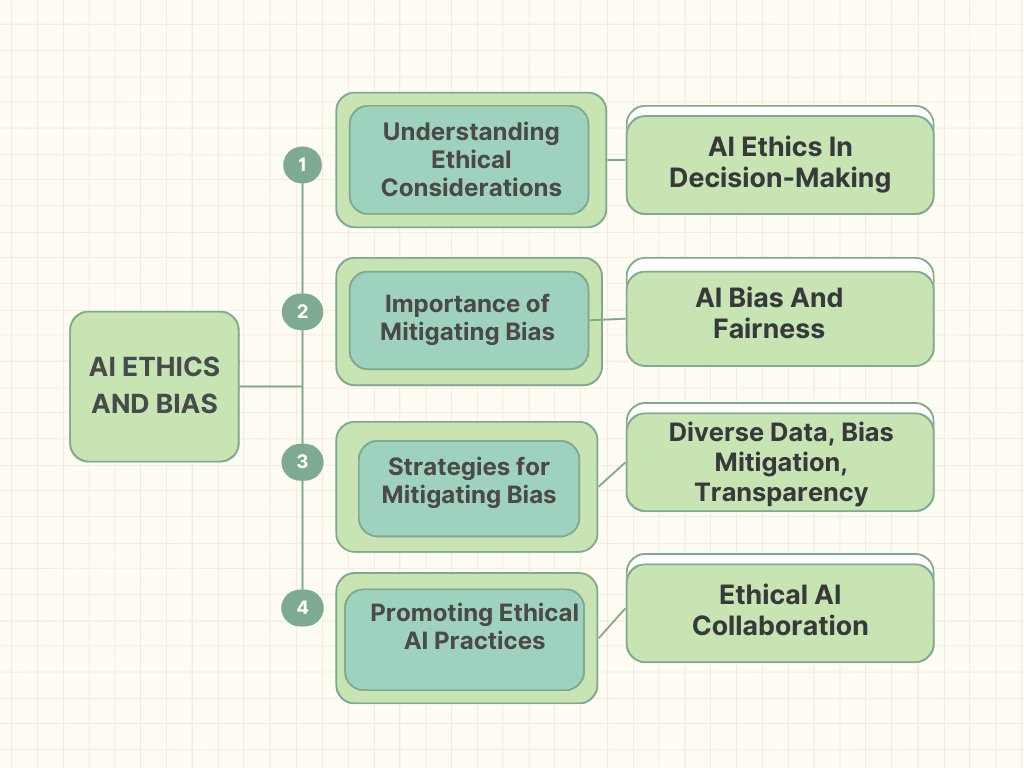
As artificial intelligence continues expanding across society, addressing ethical concerns in its development becomes essential. This piece emphasizes reducing bias in AI systems while maintaining fairness, transparency, and accountability.
Understanding Ethical Considerations
Ethical AI encompasses justice, privacy, accountability, and openness. Since AI systems influence decisions in healthcare, finance, and criminal justice, maintaining ethical standards prevents negative consequences and builds societal trust.
The Importance of Mitigating Bias
Bias in AI refers to the unfair or prejudiced treatment of specific groups or individuals. Bias perpetuates discrimination and erodes confidence in AI systems, making mitigation critical for ensuring benefits reach all communities.
Strategies for Mitigating Bias
There are four key approaches to reducing bias in AI systems:
Diverse Training Data: Ensure representative datasets avoiding group underrepresentation or overrepresentation. The quality and diversity of training data directly impacts the fairness of AI outputs.
Detection Methods: Deploy fairness-aware algorithms and audit frameworks. Regular testing helps identify biased patterns before they cause harm.
Transparency: Increase explainability enabling stakeholders to understand decision-making processes. When people understand how AI reaches conclusions, they can better identify potential issues.
Governance: Establish ethical guidelines, review boards, and regulatory frameworks. Strong governance structures ensure accountability throughout the AI development lifecycle.
Promoting Ethical AI Practices
Success requires collaboration across developers, academics, policymakers, and civil society organizations, prioritizing ethical concerns and bias reduction.
Organizations should establish clear ethical guidelines, conduct regular bias audits, and create diverse development teams that can identify blind spots. Transparency in AI decision-making helps build public trust and enables meaningful oversight.
Conclusion
Prioritizing ethical considerations and actively addressing bias ensures AI systems promote fairness, transparency, and accountability, ultimately delivering positive societal impact. The future of AI depends on our commitment to developing these technologies responsibly.